Just a few years ago, the Internet was abuzz at the thought of self-driving / autonomous cars. There was a collective realization of “Holy crap, this is actually happening one day.” Imaginations ran wild. There were countless articles of the first, second and third order effects on numerous industries. Google Trends shows this peak in interest in the topic quite nicely. Admit it, you day-dreamt of raucous games of Scrabble in the Way Back of the van. Just me? Alrighty then, let’s quietly move on…
How times have changed. Within the much-documented Hype Cycle of adoption of technology, self-driving is squarely in the Trough of Disillusionment, the period where those involved realized damn, is going to be a lot harder than we originally thought. Companies have dropped out of the race. Interest has waned.

The big players have not given up. Waymo seems to be the clear leader, with Cruise (owned by GM) a respectable second. Tesla is taking a different path altogether and is clearly succeeding as well.
Here are four ways I think the first self-driving car should be launched. This is purely a brainstorming exercise for fun.
Certain freeways and suburbs only
Let’s start with the most obvious prediction to get warmed up. Freeway/highway driving is the easiest format for self-driving cars right now. Follow the lane and you’ll generally be OK. No turns, no lights. There are fewer chances for something to go wrong. A well-funded and compelling self-driving startup called Ghost Locomotion has formed its entire thesis on only working on the freeway since it’s so much easier and represents the most overall miles driven, too. Suburban streets are second since well-marked stop signs and straightforward traffic lights are easy to process, and cyclists and pedestrians are minimal. Dense city driving is the most difficult.
Waymo and Cruise will realize freeways and suburbs are ready but cities aren’t, and create what we’ve already seen with bike-sharing apps, which are zones where it can and can’t be used, known as geofencing. Waymo will simply refuse to accept a ride to an address outside of its comfort zone.
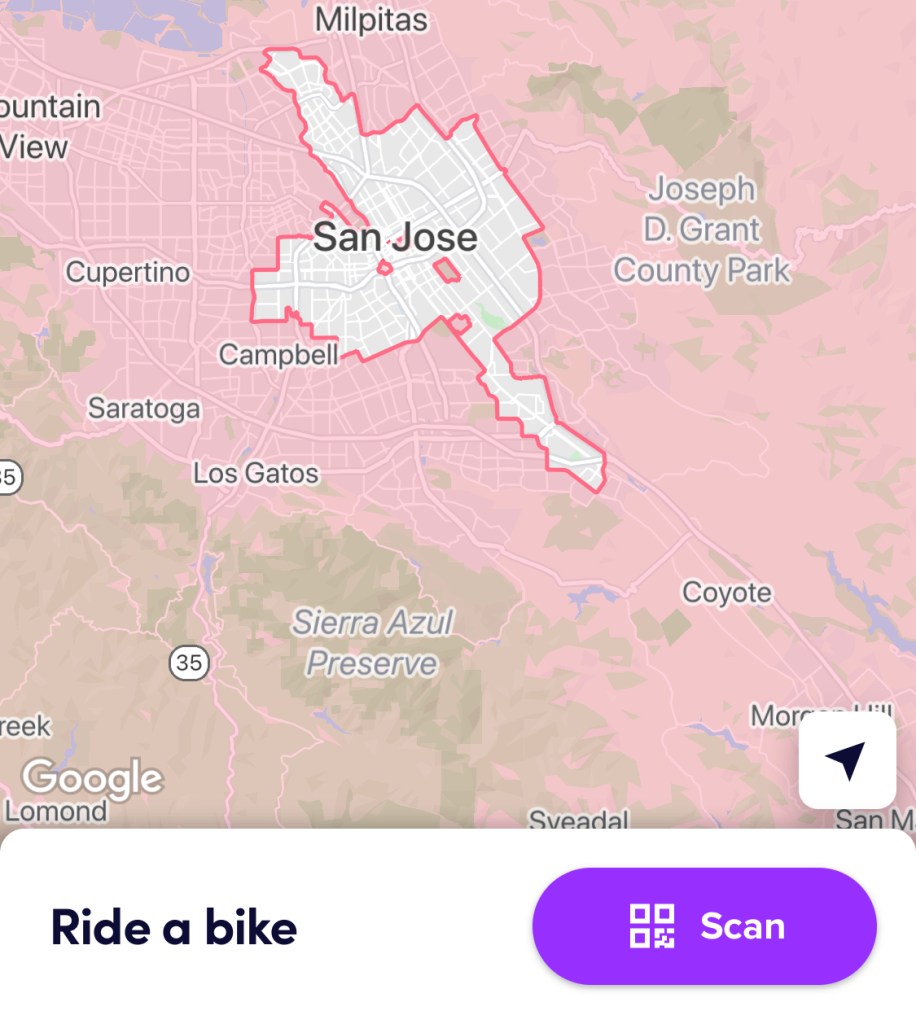
While cities like San Francisco and New York were the first to get rideshare and bikeshare, they’ll be near the end of the line to get self-driving.
Commuters (and their juicy company contracts)
Commuting is the most hated part of everyone’s day, so there’s a major pain point to be solved. It’s a near-daily habit (or was, at least), which means these are power users in the making, what every company craves.
But there’s another incentive Google and Cruise have here, which is getting other companies to pay for the rides of their employees. The sooner the commuter program works, the sooner employees will start clamoring for their company to offer it to them. Contracts at the company level would be lucrative, and in the War For Talent, companies may have their hands forced in order to compete. “You want me to come to the office? Pay for my Waymo.” I can see the CFO’s cringing now as they see the Waymo line item appear on the company budget for the first time.
The Captain’s Chair
Self-driving is quite good 99.9% or more of the time while freeway driving. I’ve averaged 20,000 miles a year in my Tesla Model 3, almost all of it freeway commuting with Autopilot on, so I feel confident in this statement.
However, even I’ll admit that the pesky remaining .1% is quite scary. Self-driving technology is notoriously vulnerable to “black swan”-type obstacles, like a large object in the road that’s not supposed to be there. I’m reminded of a black leather couch smack dab in the middle of the freeway driving home from work one night. I’m not confident the Tesla would have reacted as well as I did.
No one wants a serious crash, obviously. However, the whole point is to not have a paid driver. We need one more transition phase…
I predict/suggest that Waymo and Cruise launch their suburban/freeway only, commuter-focused minivans with one volunteer rider in the Captain’s Chair, aka the driver. This person’s can relax, hands-free as I do, but pay attention to the road and brake if that black swan event occurs. My guess is they’ll get a discounted rate (unless there is regular interest in doing it at full price for peace of mind?) There won’t be any personal liability to them if something goes wrong. This could be framed/branded in a fun way, like the friendly school bus driver.
Individual, sealed-off booths for each passenger
Now it’s time for a crazier idea. For shared rides, bringing strangers together in small spaces like a minivan is going to create interpersonal problems: someone talking loudly, getting sick, being rude or inappropriate, etc. There are privacy implications of someone knowing where you were dropped off. In case this happens, unlike say a train, getting off at the next stop won’t be easy. In the past, there has always been an authority in charge, whether it be a bus driver or Uber/Lyft driver in case of a shared ride, to enforce policies.
Waymo and Cruise won’t have that authority, which creates real risk for them and the user experience. We need another solution.
My idea is a modified van where every seat is essentially a private booth with its own door to the street. You’re instructed via the mobile app to go to L1 (Left 1, Captain’s Seat), L2, L3, or R1, R2, R3. It’s separated in every way (visual, sound) from the others. You are free to Facetime with Mom, Zoom with your boss, take a nap, or play music. Perhaps there’s a mini TV where you can play a movie or cast from your phone. There’s a history of who’s been in L2 so in case of damage or a lost item, it can be traced back to you.
While this might remove some of the serendipitous fun once in a while, to me this provides more mental and physical safety for each passenger, freedom to do more activities, and lessens Waymo headaches as well. I think it’s an experiment worth trying.
Wrapping it Up
In summary, I think we’ll see a suburban/freeway geofenced area to start, likely with a commuter program emphasis and some sort of semi-volunteer role to watch the road. If Cruise and Waymo are feeling extra creative, they’ll do the private booth concept. If they don’t, I hope I see you in the Way Back for a game of Scrabble sometime soon.
 Alex McCauley's Blog